
Imagine a major airport is hit with sudden fog. Airline A decides to delay its departures based on its internal weather forecast. Airline B, unaware of Airline A’s decision, continues pushing for on-time departures. Air Traffic Control (ATC), still working from outdated flight plans, begins sequencing aircraft based on old data.
Meanwhile, ground crews start prepping gates based on the original schedule, which is now completely out of sync with actual operations. Everyone is doing their job. But no one is operating from the same information.
This is what happens when aviation data is siloed. Air Traffic Management (ATM), ground crews, operators, airports, and support services often rely on disconnected data sources, each making decisions in isolation. This results in misalignment, inefficiencies, and delays across the system.
Collaborative Decision Making (CDM) ensures decisions are based on a shared common operating picture of the National Airspace System (NAS), getting the right information to the right stakeholders at the right time. According to the Federal Aviation Administration (FAA), this joint government and industry initiative aims at improving air traffic flow management through increased information exchange among aviation stakeholders. CDM focuses on optimizing decision-making and knowing the constraints of other stakeholders in the aviation ecosystem to enable the effective and timely resolution of issues that may arise.
While traditional aviation has gradually adopted CDM principles, AAM presents a unique opportunity to implement collaborative frameworks from the start with a digital-first approach.
Implementing CDM in Advanced Air Mobility
In AAM, CDM enables seamless information sharing among flight operators, vertiport managers, TSPs, and ANSPs, significantly improving airspace coordination and ATM. Unlike current voice-based communications, AAM will depend on digital exchanges with flight operators, as well as ATC communication with uncrewed aircraft via data links and command, control, and information (C2I) links.
This digital transformation is essential. When everyone uses the same real-time data, the entire ecosystem becomes more efficient. Resources are optimized, operations flow smoothly, and stakeholders can proactively respond to changing conditions.
The International Civil Aviation Organization (ICAO) identifies key CDM benefits that translate directly to AAM: enhanced airspace access, increased capacity, and improved decision-making through the timely exchange of high-quality information. But realizing these benefits requires full ecosystem participation, as interoperability isn’t possible without everyone contributing to the same data loop.
Creating the Digital Twin
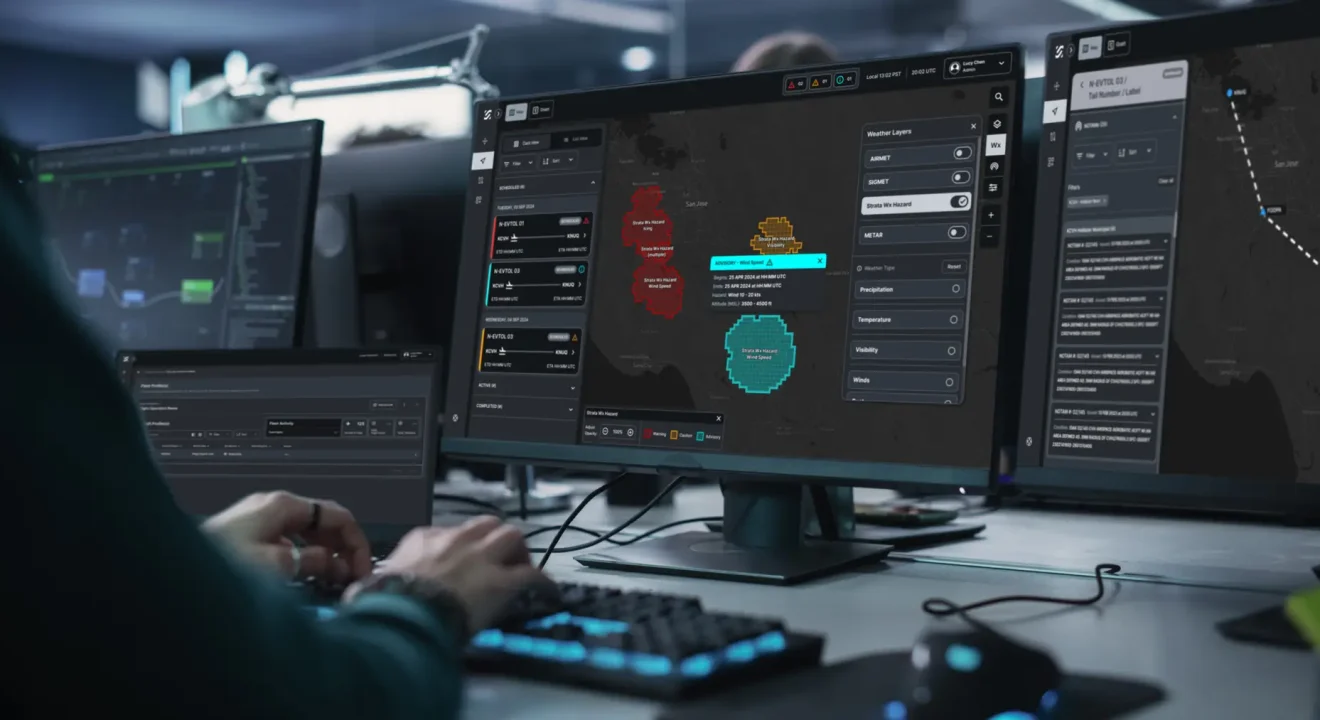
SkyGrid’s vision centers on providing the foundation for AAM’s collaborative future through a shared common operating picture and digital twin of the operating environment. This requires standardized data formats protected by robust cybersecurity measures.
Let’s say an eVTOL is flying between vertiports that are operated by different companies. Success depends on seamless, real-time data flow. Vertiport availability, charging station status, departure queues, and ATC restrictions must all be accessible in one synchronized ecosystem. Without this shared visibility, coordination breaks down and inefficiencies multiply.
The interconnected nature of this data ecosystem means vertiport systems can integrate with operator platforms, operators can connect with ATC systems, and ATC information is available to TSPs. This synchronized data flow powers the digital twin and makes collaborative decision making a reality.
The Collaborative Future
The success of AAM hinges on infrastructure, governance, and the collaborative frameworks we put in place today. Regulatory bodies, TSPs, ANSPs, and manufacturers must align on digital standards to ensure the success of CDM. The industry must accept that digital transformation isn’t a nice-to-have; it’s a prerequisite for scalable AAM.
Beyond operational efficiency, CDM serves as a catalyst for global AAM harmonization. By sharing information, values, and preferences, stakeholders can learn from each other and build a common pool of knowledge that drives ecosystem-wide benefits. We need a future where decisions and actions optimize value and efficiency for everyone involved. These systems must be built collaboratively from the start, creating the connected sky that AAM will demand.